
Can a Cracked Tooth Need a Root Canal? What Determines the Treatment

A cracked tooth can cause anything from occasional discomfort when you bite to sharp sensitivity that makes eating difficult. But a crack does not automatically mean you need a root canal. The right treatment depends on where the crack is located, how deep it extends, whether the tooth’s pulp is damaged, and whether enough healthy tooth structure remains to restore it.
Understanding those differences can help you seek treatment before a small crack becomes a more serious problem. If you’re looking for root canal therapy Cheshire patients can turn to for a cracked or painful tooth, a professional evaluation is the best way to determine whether the tooth can be preserved and which treatment is appropriate.
At Advanced Dentistry, we evaluate the condition of the tooth and surrounding tissues before recommending treatment. Our goal is to help patients understand their options and preserve their natural teeth whenever appropriate.
Can a Cracked Tooth Need a Root Canal?
Yes, a cracked tooth can sometimes need root canal treatment, but not every cracked tooth does.
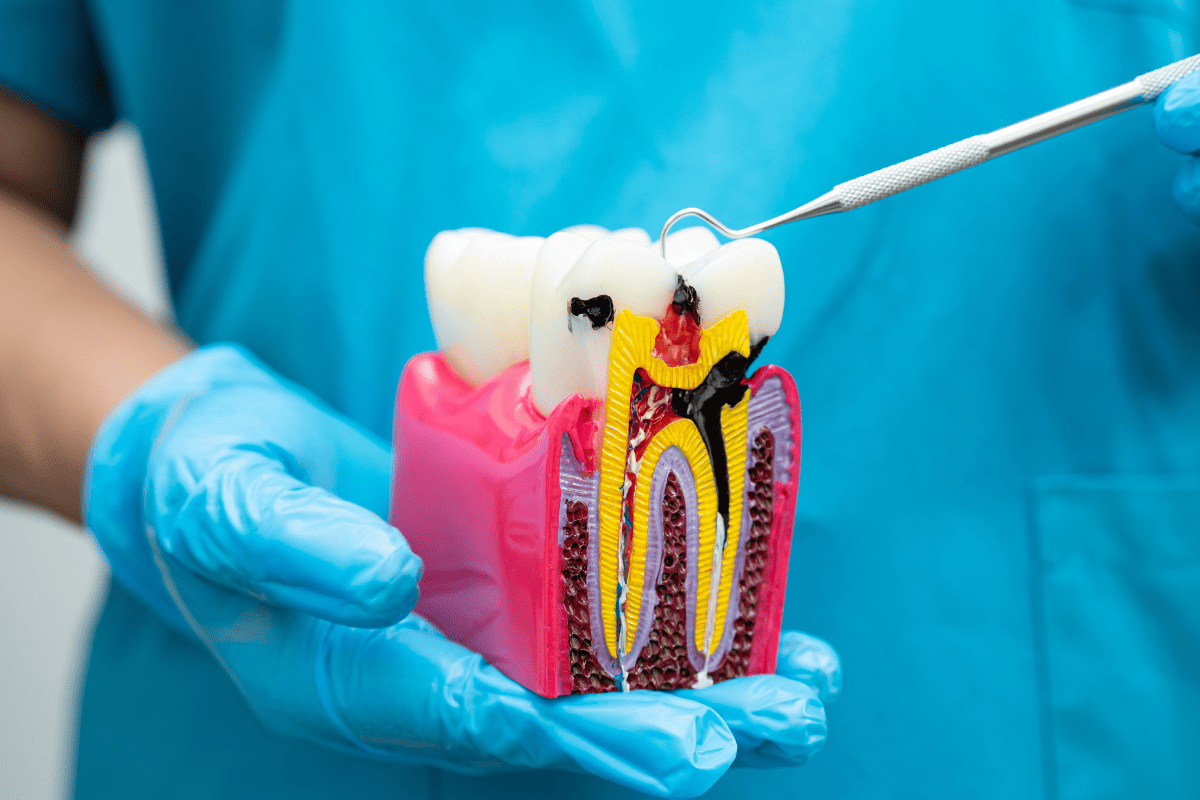
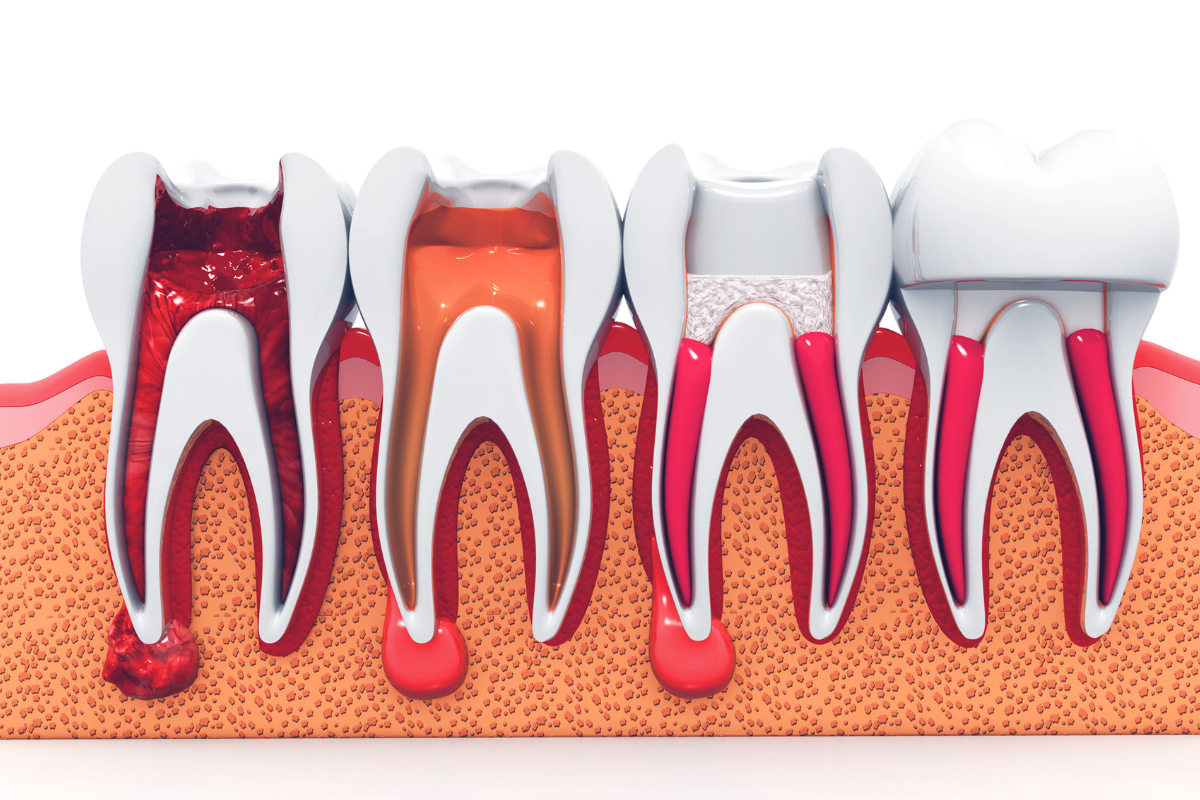
A crack becomes more concerning when it extends into the inner portion of the tooth, where the pulp is located. The pulp contains nerves and blood vessels. If the crack allows bacteria to reach the pulp and the tissue becomes irreversibly inflamed or infected, root canal therapy may be recommended to remove the damaged pulp, clean the root canals, and seal the tooth.
The American Association of Endodontists explains that treatment depends on the type, location, and extent of the crack. A cracked tooth that extends into the pulp may be treated with a root canal and crown, while a crack extending below the gum line may make the tooth impossible to restore.
That is why simply seeing a crack does not tell you what treatment you need.
What Determines Whether a Cracked Tooth Needs a Root Canal?
Several factors help determine the appropriate treatment.
1. How Deep the Crack Is
The depth of the crack is one of the most important considerations.
A very shallow line affecting only the enamel may not require treatment at all. These are often called craze lines and are common in adult teeth. They generally do not cause pain.
A deeper crack can extend through the enamel and dentin toward the pulp. If the pulp remains healthy, the treatment may focus on protecting and restoring the tooth without immediately performing a root canal.
If the crack reaches the pulp and causes significant inflammation or infection, however, root canal treatment may become necessary.
2. Where the Crack Is Located
The location of a crack can change the treatment options considerably.
For example, a crack involving the chewing surface of a tooth may be manageable with a restoration designed to protect the remaining tooth structure. In other situations, a crack can extend vertically toward the root and become much more difficult to restore.
The AAE identifies several types of tooth cracks, including:
- Craze lines
- Fractured cusps
- Cracked teeth
- Split teeth
- Vertical root fractures
Each has different treatment considerations.
A tooth that has cracked in a way that remains above the gum line may have options for preservation. A crack that extends below the gum line or creates a complete split can have a much less favorable prognosis.
3. Whether the Tooth’s Pulp Is Damaged
A crack by itself does not necessarily mean the nerve inside the tooth is infected.
Your dentist needs to determine whether the pulp is healthy, irritated, irreversibly inflamed, or no longer viable.
A cracked tooth may produce symptoms such as:
- Sharp pain when biting or releasing a bite
- Sensitivity to hot or cold
- Pain that comes and goes
- Persistent toothache
- Swelling around the tooth
- Discomfort that is difficult to pinpoint
The AAE notes that cracked teeth can cause erratic pain during chewing and temperature sensitivity, and that the pulp can eventually become damaged as the crack progresses.
This is one reason a cracked tooth should not be diagnosed based on symptoms alone.
When a Cracked Tooth May Need Only a Crown or Restoration
Not every cracked tooth requires endodontic treatment.
If the pulp is still healthy and the crack has not caused significant internal damage, your dentist may recommend a restorative approach designed to protect the tooth.
Depending on the situation, this could involve a filling, onlay, crown, or another restoration.
A crown may be particularly useful when a significant amount of tooth structure needs protection. It covers the tooth and can help reduce stress on the remaining structure during normal biting and chewing.
The exact restoration depends on the location and extent of the damage. Your dentist will also consider how much healthy tooth structure remains and whether the tooth can be predictably restored.
When Root Canal Therapy May Be Recommended
Root canal treatment may be appropriate when the crack has affected the pulp and the tooth remains restorable.
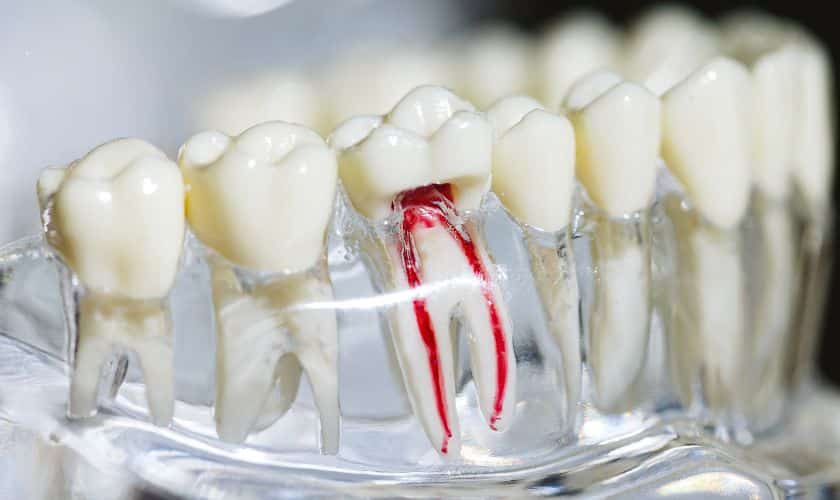
During root canal therapy, the damaged or infected pulp is removed. The canals inside the tooth are cleaned, shaped, and sealed to help prevent bacteria from continuing to cause problems.
The goal is to address the internal infection or inflammation while keeping the natural tooth in place.
At Advanced Dentistry, our existing root canal service explains that treatment involves accessing the canals, removing infected tissue, cleaning the canals, and sealing the space. A crown may then be recommended to protect the treated tooth.
For a cracked tooth, the decision is more nuanced because treating the pulp does not make the crack itself disappear. The tooth still needs appropriate structural protection and ongoing monitoring.
Why a Crown May Be Needed After a Root Canal
If a cracked tooth needs root canal therapy, restoring the tooth afterward is an important part of the overall treatment plan.
A root canal addresses the damaged pulp, but it does not physically “heal” the crack. The remaining tooth structure still has to withstand normal biting forces.
The AAE notes that when a crack extends into the pulp, root canal treatment may be combined with a crown to protect the tooth. It also emphasizes that a crown does not guarantee that every cracked tooth will remain successful indefinitely.
That distinction is important. Root canal therapy and the final restoration address different aspects of the problem:
Root canal treatment:
Treats the damaged or infected pulp inside the tooth.
Crown or other restoration:
Protects and restores the remaining tooth structure.
Both may be necessary when a cracked tooth has affected the pulp but can still be restored.
When a Cracked Tooth May Not Be Salvageable
Unfortunately, some cracks are too extensive for the tooth to be predictably restored.
A crack that extends below the gum line can make it difficult or impossible to adequately restore and protect the tooth. A split tooth, in which the tooth has separated into distinct segments, may also require extraction depending on the location and extent of the fracture.
Vertical root fractures are another complicated situation. These cracks begin in the root and can extend toward the chewing surface. Treatment may sometimes involve specialized procedures, but extraction may be necessary in many cases.
This is why it is not accurate to assume that every cracked tooth should receive a root canal.
The more important question is:
Can the tooth be predictably restored and maintained?
How a Dentist Determines the Right Treatment
Diagnosing a cracked tooth can be challenging because cracks are not always visible on a conventional dental X-ray, and symptoms can be inconsistent.
A dental evaluation may include:
- Reviewing your symptoms and dental history
- Examining the tooth and surrounding gums
- Testing how the tooth responds to biting
- Checking the pulp’s response to temperature or other tests
- Looking for isolated periodontal changes
- Using magnification or transillumination when appropriate
- Taking dental X-rays
- Considering additional imaging when clinically indicated
The AAE describes clinical tests such as biting tests, transillumination, magnification, staining, and periodontal probing as tools that may help identify and assess cracked teeth.
The important point is that diagnosis is not based on one test alone. Your dentist considers the complete clinical picture before recommending treatment.
What If Your Cracked Tooth Doesn’t Hurt?
A painless crack should not automatically be ignored.
Some cracked teeth have minimal or intermittent symptoms, particularly in the early stages. According to the AAE, cracks can sometimes remain asymptomatic before symptoms become more noticeable.
You may notice only:
- A brief twinge when chewing
- Occasional cold sensitivity
- A rough edge
- A visible line
- Mild discomfort that disappears quickly
Because symptoms can be subtle, having a dentist evaluate a suspected crack can help determine whether it is simply a superficial enamel line or something that requires treatment.
What Should You Do If You Think You Cracked a Tooth?
If you suspect that you’ve cracked a tooth, try to avoid putting unnecessary pressure on it until you can have it examined.
You can:
- Avoid chewing hard foods on the affected side.
- Avoid chewing ice, hard candy, or other very hard objects.
- Keep the area clean with normal brushing and flossing.
- Pay attention to when the tooth hurts and what triggers the discomfort.
- Contact your dentist for an evaluation, particularly if pain or sensitivity persists.
If you develop significant swelling, severe pain, fever, or difficulty swallowing or breathing, seek urgent medical attention. Facial swelling that affects breathing or swallowing can require emergency medical care.
Can a Cracked Tooth Get Worse Without Treatment?
It can.
Chewing places repeated forces on a cracked tooth. Over time, the crack may extend farther through the tooth structure. If bacteria reach the pulp, inflammation or infection can develop.
The AAE notes that untreated cracks can progress and that early diagnosis is important when attempting to preserve a cracked tooth.
That does not mean every crack will inevitably become a major problem. It does mean that you should not assume a painful or suspicious crack will simply resolve on its own.
Getting the tooth evaluated gives you a clearer understanding of what you are dealing with, while there may still be restorative options.
Root Canal Therapy for a Cracked Tooth in Cheshire, CT
If you have a cracked tooth and are wondering whether you need a root canal, an in-person evaluation is the most reliable way to find out.
At Advanced Dentistry, we provide comprehensive dental care in Cheshire, Connecticut, including restorative treatments, dental crowns, extractions, and root canal therapy. Our team can evaluate your symptoms, examine the affected tooth, and explain the treatment options that may be appropriate for your situation.
Our Cheshire office is located at 435 Highland Ave #210, making it convenient for local patients who need evaluation for tooth pain, damage, or other dental concerns.
Rather than assuming a cracked tooth automatically requires extraction or a root canal, the better approach is to determine exactly where the crack is and whether the tooth can be restored.
Frequently Asked Questions
Can a cracked tooth be saved with a root canal?
Sometimes. If the crack has damaged the pulp but the tooth remains structurally restorable, root canal treatment followed by an appropriate restoration may be an option. Cracks extending below the gum line or certain root fractures may make the tooth difficult or impossible to save.
Does every cracked tooth need a root canal?
No. A superficial craze line may need no treatment, while other cracks may be treated with a restoration such as a crown. Root canal therapy is generally considered when the tooth’s pulp has become significantly inflamed or infected and the tooth can still be restored.
Can a cracked tooth heal on its own?
The crack itself does not heal like a broken bone. Some minor cracks may remain stable, but deeper cracks can progress. A dentist should evaluate a suspicious crack to determine its type and extent.
What happens if a cracked tooth reaches the nerve?
If the crack allows bacteria or irritation to damage the pulp, you may develop persistent pain, temperature sensitivity, or other symptoms. When the pulp cannot recover, root canal treatment may be recommended if the tooth is still restorable.
Is a crown always needed after a root canal for a cracked tooth?
Not necessarily in every case, but a crown or other protective restoration may be recommended depending on how much tooth structure remains and where the crack is located. Your dentist can determine the appropriate restoration after evaluating the tooth.
Protect Your Natural Tooth With the Right Treatment
A cracked tooth does not automatically mean you need a root canal, and a root canal does not automatically mean the tooth is beyond saving. The treatment depends on the crack’s location, depth, relationship to the pulp, and overall restorability.
If you are experiencing pain when biting, sensitivity to hot or cold, or have noticed a crack or fracture, don’t wait for the symptoms to become severe. Contact Advanced Dentistry in Cheshire to schedule an evaluation. Our team can assess the tooth and explain whether root canal therapy, a crown, another restorative treatment, or a different approach may be appropriate for your needs.