
How Many Veneers Do You Actually Need for a Natural Smile?

If you are considering veneers, one of the first questions you may have is, “How many teeth actually need veneers?” You may see treatment plans mentioning four, six, eight, or even ten veneers, but there is no universal number that works for every smile. The right approach is to determine which teeth need cosmetic improvement and how many should be treated together to create a balanced, natural appearance.
For patients considering dental veneers in Cheshire, the number of veneers should be based on your individual smile, not simply on a predetermined package. Your dentist will consider which teeth are visible when you smile, their shape and color, your bite, existing dental work, and the result you want to achieve.
Why There Isn’t a Standard Number of Veneers
Veneers are custom-made for individual teeth, so treatment does not necessarily mean covering every tooth that is visible.
Someone with one chipped or discolored front tooth may only need a single veneer. Another person who wants to change the appearance of several front teeth may benefit from a larger set.
The goal is not to place as many veneers as possible. The goal is to treat the appropriate teeth so your smile looks proportional and cohesive.
Several factors can influence that decision, including:
- How many teeth show when you smile naturally
- The width and shape of your smile
- The color and condition of neighboring teeth
- Whether you want to change tooth color, shape, size, or several characteristics
- The alignment and spacing of your teeth
- Your bite and overall oral health
- Existing crowns, fillings, or other dental restorations
- Whether your natural teeth can be matched to the planned veneer shade
This individualized approach is important because a veneer that looks excellent on one tooth may not look natural if the teeth immediately beside it have noticeably different shapes or colors.
Start With Your “Smile Zone”
One of the most useful ways to think about veneer treatment is your smile zone, the teeth that are visible when you smile and talk.
Not everyone shows the same number of teeth. Some people primarily display their six front upper teeth, while others show additional teeth toward the sides. Your upper lip movement, smile width, tooth proportions, and facial structure all influence what other people see.
That means counting your teeth in a mirror is not enough to determine your treatment plan.
A dentist can evaluate your smile from different angles and consider how your teeth look when your lips are relaxed, when you speak, and when you smile naturally.
This is one reason a consultation is more useful than choosing a veneer number from an online package.
How Many Veneers Might You Need?
There are several common treatment ranges, but these are examples rather than fixed recommendations.
One or Two Veneers
A small number of veneers may be appropriate when the concern is limited to one or two teeth.
For example, you might have:
- A chipped front tooth
- A misshapen tooth
- A tooth that is noticeably smaller than its neighbor
- Significant discoloration affecting an individual tooth
- A minor cosmetic difference that you want to correct
In these situations, the challenge is often matching the veneer to the surrounding natural teeth. Shade, translucency, shape, and proportions become particularly important when only one tooth is being treated.
Four Veneers
Four veneers may be considered when the cosmetic concern is concentrated around the most visible front teeth.
This approach can work for certain patients who want a focused improvement rather than a broader smile transformation. However, whether four veneers provide a balanced result depends on how much of your smile is visible and how the untreated teeth look beside them.
For some patients, stopping at four may leave a noticeable transition between veneered and natural teeth. For others, four may be sufficient.
Six Veneers
Six veneers can cover the six most prominent upper front teeth for some patients.
This can be useful when the main goal is to improve the appearance of the central portion of the smile while maintaining a relatively conservative treatment area.
However, six is not automatically the “right” number. If your smile extends farther toward the back, additional teeth may be visible when you smile widely.
Eight or More Veneers
Patients who want a broader change may consider veneers across more of the visible upper smile.
Eight, ten, or another number may be appropriate depending on the width of your smile and which teeth need to blend.
The important point is that a larger number of veneers is not automatically better. Treating additional teeth only makes sense when those teeth contribute to the appearance of the smile and the treatment is appropriate for your oral health and goals.
What Determines the Number of Veneers You Need?
1. How Wide Your Smile Is
A person with a narrow smile may show fewer teeth than someone with a broad smile.
If you treat only the front teeth but several untreated teeth remain visible beside them, the difference in color or shape may be noticeable. Your dentist can determine where the visible smile zone begins and ends before deciding how many teeth should be included.
2. Your Desired Shade
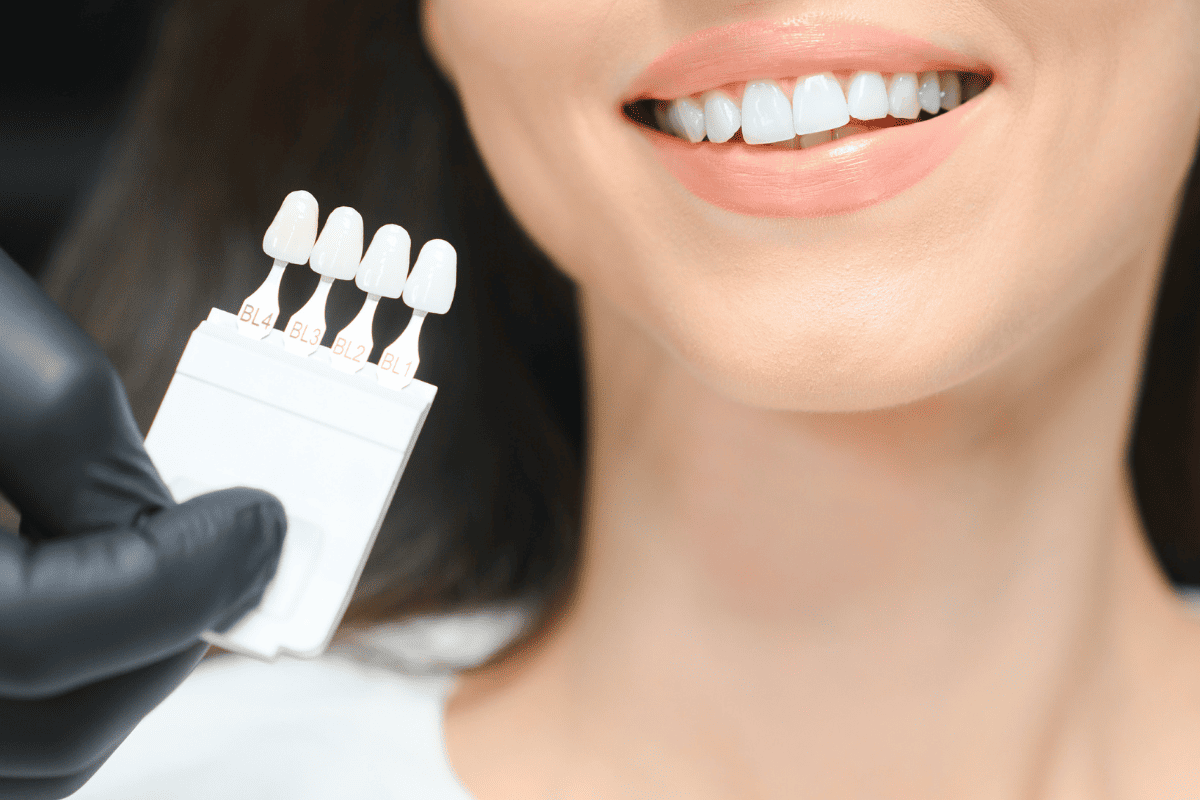
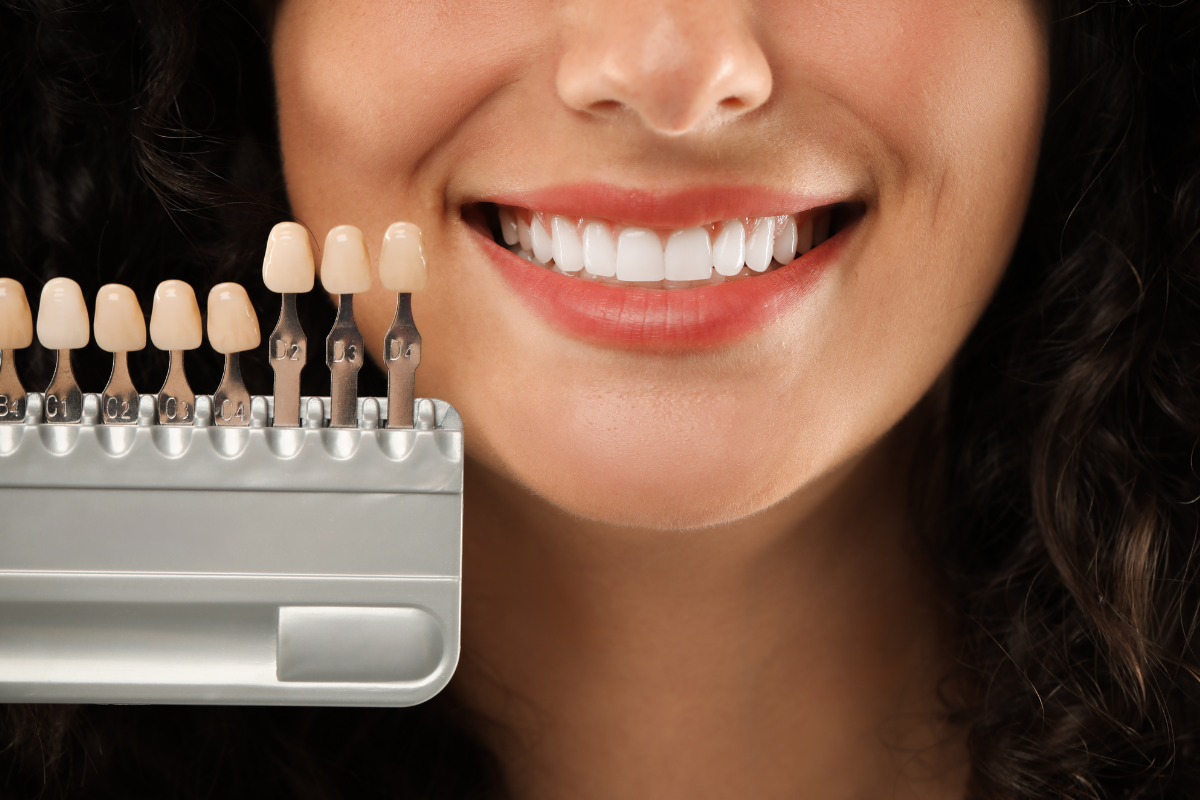
If you want a significant change in tooth color, the number of veneers may depend on how much of your visible smile needs to have the new shade.
For example, placing veneers on only two teeth while leaving significantly darker neighboring teeth untreated could make shade matching more challenging.
In some cases, professional teeth whitening may be considered before veneers so the natural teeth can be brought closer to the planned veneer shade.
3. Tooth Shape and Proportion
Color is only one part of a natural-looking smile.
The shape, width, length, and proportions of neighboring teeth also matter. If one tooth is noticeably shorter or narrower than the others, treating only that tooth may not produce the overall balance you are looking for.
Veneers can be customized to address several cosmetic characteristics at once, but the design still needs to work with the surrounding teeth.
4. Alignment and Spacing
Veneers can improve the appearance of certain minor cosmetic alignment concerns, but they are not a substitute for orthodontic treatment in every situation.
If teeth are significantly rotated, crowded, or misaligned, your dentist may recommend addressing the underlying alignment before considering veneers.
This is another reason the number of veneers cannot be determined simply by counting visible teeth.
5. Your Existing Dental Work
Crowns, fillings, bonding, and previous cosmetic dentistry can affect your veneer plan.
For example, if you already have a restoration on one of your front teeth, your dentist may need to consider how that tooth will blend with any new veneers.
A coordinated treatment plan can help avoid an obvious difference between new veneers and existing dental work.
6. Your Bite and Oral Health
Cosmetic planning should never be separated from dental health.
Before placing veneers, your dentist should evaluate the health of your teeth and gums as well as your bite. Issues such as untreated decay, gum disease, significant tooth damage, or heavy grinding may need attention before cosmetic treatment.
Advanced Dentistry’s veneer service explains that candidates generally need healthy teeth and gums before moving forward with treatment.
Does Getting More Veneers Make Your Smile Look More Natural?
Not necessarily.
A natural-looking smile is not determined by the number of veneers alone. It depends on how well the restorations fit the individual characteristics of your smile.
A well-designed treatment plan considers:
- Tooth proportions
- Shade
- Shape
- Symmetry
- Gum appearance
- Smile width
- Facial features
- Bite and function
- The appearance of untreated neighboring teeth
The objective is for the veneers to look like a natural part of your smile rather than stand out as separate restorations.
Advanced Dentistry already emphasizes customized veneer design to improve color, shape, and overall smile appearance. The same principle applies when deciding how many teeth should actually be treated.
Should You Get Veneers on Your Upper or Lower Teeth?
Most cosmetic veneer treatment focuses on the upper front teeth because they are often highly visible when smiling. However, the lower teeth can also contribute to the overall appearance of a smile.
Whether lower veneers are appropriate depends on how much of your lower teeth you show, your desired result, tooth condition, and how your upper and lower teeth come together.
A comprehensive consultation can help determine whether treating only the upper teeth will provide the appearance you want or whether the lower smile should also be considered.
What If You Only Need to Fix One Tooth?
You do not necessarily need multiple veneers just because veneers are a cosmetic treatment.
If one tooth is the source of the concern, your dentist may consider whether a single veneer, dental bonding, whitening, or another treatment is more appropriate.
Advanced Dentistry also provides dental bonding in Cheshire, which can be used for certain minor cosmetic concerns such as small chips, discoloration, gaps, or changes in tooth shape.
The best choice depends on the condition of the tooth and the result you want—not simply on which treatment sounds more comprehensive.
How Your Dentist Determines the Right Number
A veneer consultation should be more than choosing a number.
At Advanced Dentistry, our team can evaluate your teeth and discuss what you would like to change about your smile. The process may include examining your teeth and gums, assessing your bite, reviewing the visible teeth in your smile, and discussing your desired color and shape.
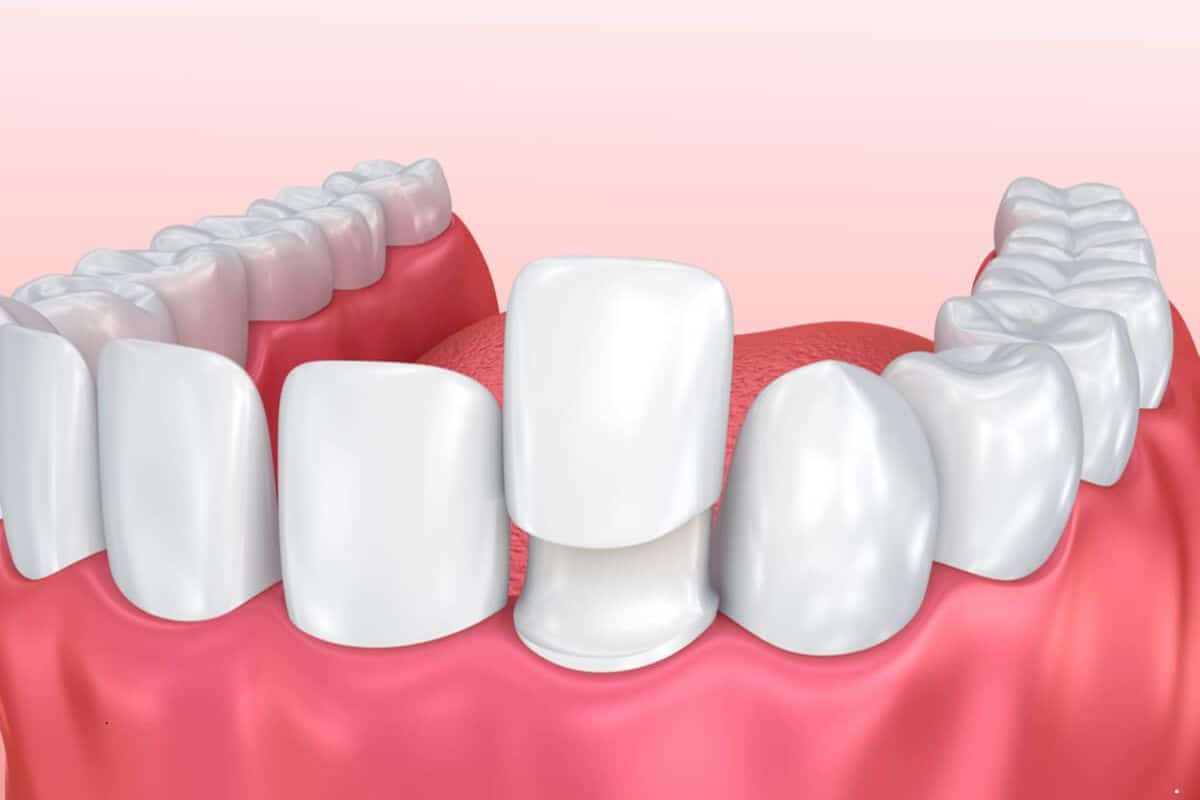
The treatment planning stage is particularly important because veneers are customized restorations. Advanced Dentistry’s existing veneer service notes that the treatment generally involves consultation and planning, tooth preparation, impressions, laboratory fabrication, and final placement.
Rather than asking, “Should I get six or eight veneers?” a better question is:
“Which teeth need to be treated to create the healthiest and most natural-looking result for my smile?”
That shift in perspective can make your consultation much more productive.
Questions to Ask Before Choosing a Veneer Number
If you are considering veneers, ask your dentist:
- Which teeth are visible in my natural smile?
- Would one or two veneers be enough for my concern?
- Will untreated teeth beside the veneers be noticeable?
- Should I whiten my natural teeth before choosing a veneer shade?
- Would bonding or another cosmetic treatment be a better option for any of my teeth?
- Do I have any oral health issues that should be addressed first?
- How will my bite affect the treatment?
- How will the veneers be designed to look natural with my facial features?
These questions can help you understand why a particular treatment plan is being recommended rather than focusing only on the number of restorations.
Frequently Asked Questions
How many veneers are usually needed for a smile makeover?
There is no standard number. Some patients may need only one or two veneers for a specific cosmetic concern, while broader smile makeovers may involve several visible front teeth. The appropriate number depends on your smile and treatment goals.
Is it better to get 6 or 8 veneers?
Neither number is automatically better. Six may be enough for some smiles, while a wider smile may show additional teeth. Your dentist should evaluate your smile zone, tooth proportions, shade, and overall goals before recommending a number.
Can I get only one dental veneer?
Yes, a single veneer may be appropriate when one tooth has a cosmetic concern and can be matched successfully with the surrounding teeth. Your dentist can also determine whether bonding or another treatment may be a better option.
Do I need veneers on every tooth that shows when I smile?
Not necessarily. The number depends on the appearance and condition of each tooth, how much of your smile is visible, and the result you want. Some visible teeth may not require veneers.
How do I know how many veneers I need in Cheshire, CT?
The best way to determine the appropriate number is through an in-person cosmetic dental evaluation. A dentist can examine your teeth, gums, bite, smile, and existing restorations and then develop a treatment plan based on your individual needs.
Create a Veneer Plan Designed Around Your Smile
No magic number of veneers creates a natural smile for everyone. The right treatment may involve one veneer, several front teeth, or a broader smile design depending on what you want to change and what your dentist finds during your evaluation.
If you are considering dental veneers in Cheshire, CT, Advanced Dentistry can help you understand your options and determine which approach makes sense for your smile. Our team provides personalized cosmetic dental care with attention to tooth health, appearance, and your individual goals.
Schedule a consultation with Advanced Dentistry in Cheshire to discuss your smile goals and learn how veneers or other cosmetic dentistry options can help you move toward the smile you want.